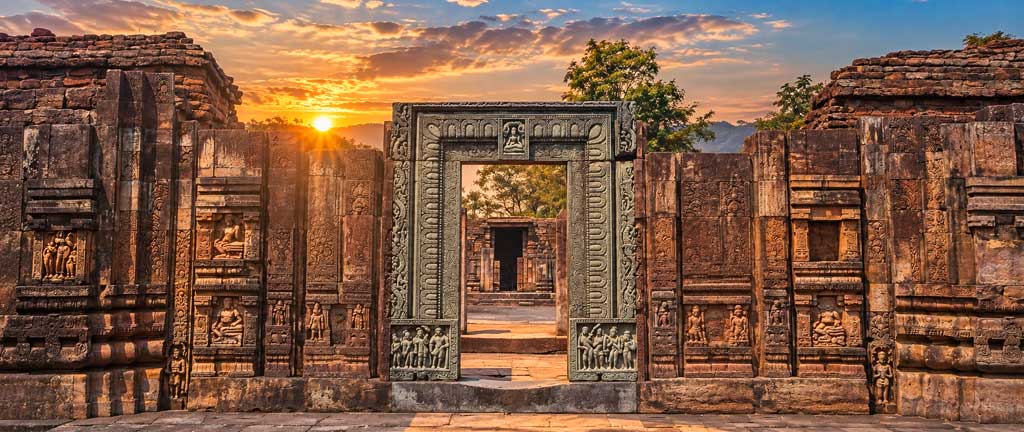
Traverse two millennia of Buddhist civilization across eastern India in one transformative journey. This 4N/5D immersive tour bridges West Bengal’s emerging 6th-12th century Buddhist monastic archaeology at Mogalmari with Odisha’s ancient Buddhist pilgrimage circuit (3rd century CE Mauryan through 8th-9th century Vajrayana). Departing Kolkata and concluding in Bhubaneswar, this comprehensive itinerary serves international Buddhist pilgrims, scholars, heritage travelers, and those seeking authentic discovery of eastern India’s spiritual landscape beyond crowded northern circuits.
TOUR OVERVIEW AND STRATEGIC POSITIONING
Total Duration: 4 nights, 5 days (approximately 120 to 130 hours door-to-door)
Starting Point: Kolkata (hotel or airport pickup)
Ending Point: Bhubaneswar (hotel drop-off or airport/railway station)
Total Distance: Approximately 700 to 750 km
Key Heritage Sites: Mogalmari (WB), Udayagiri (Odisha), Lalitgiri (Odisha), Ratnagiri (Odisha), Dhauli (Odisha), Pipili (Odisha), Bhubaneswar temples and museums
Best for: Buddhist pilgrims, archaeological scholars, cultural heritage travelers, international delegates, multigenerational families seeking authentic spiritual immersion
Unique Value: Only comprehensive itinerary connecting Mogalmari’s emerging archaeology with Odisha’s established Buddhist pilgrimage network; one-way logistics eliminate return travel; evidence-based interpretation across both regions
DAY TRIP ITINERARY
DAY 1: KOLKATA TO MOGALMARI ARCHAEOLOGICAL SITE
Very Early Morning Departure from Kolkata (5:00 AM to 5:30 AM)
Depart from your Kolkata hotel, airport, or railway station via AC private vehicle southwestward toward Kharagpur. Complimentary morning tea, coffee, and light snacks provided. Early departure maximizes daylight at Mogalmari and evening arrival buffer in Bhubaneswar.
Journey routing: Kolkata to Kharagpur via NH-6 (approximately 120 km, 2 to 2.5 hours).
Mid-Morning Arrival at Kharagpur and Site Briefing (8:00 AM to 8:25 AM)
Brief 20-minute halt in Kharagpur town. Your specialist archaeological guide orients you to Mogalmari’s significance as West Bengal’s largest excavated Buddhist monastery complex (6th-12th century CE), historical context, and interpretive framework for the day’s intensive exploration.
Late Morning Travel to Mogalmari (8:25 AM to 9:55 AM)
Northeastward journey via NH-16 toward Mogalmari village (approximately 63 km, 90 minutes). Transition through rural rice plains and villages provides context for understanding monastic settlement patterns and regional trade routes.
INTENSIVE MOGALMARI SITE EXPLORATION (10:00 AM to 1:30 PM)
Total on-site engagement: Approximately 3.5 hours
Station 1: Sakhisena Mound and Excavation Zones (35 minutes)
Walk the primary mound revealing West Bengal’s largest monastic complex. Observe exposed brick structures, monastic cells, votive stupas, and artifact patterns. Your guide explains archaeological stratigraphy, two-phase construction (6th-7th century and 11th-12th century), and what material evidence reveals about monastic life and community organization.
Station 2: The Stucco Wall Complex (70 minutes)
Enter the protective plastic-covered structure housing the western wall. Close examination of intricate stucco figures depicting Buddha, Bodhisattvas, celestial beings, and syncretic deities (Jambala, Saraswati). Interpretation focuses on Vajrayana Buddhist philosophy, Gupta artistic traditions, and artistic connections to Nalanda monastery programs.
Descent via steep metallic staircase (with handrails and staff assistance) provides intimate access to decorative details.
Station 3: On-Site Museum and Artifact Documentation (50 minutes)
Visit the club-converted museum atop Sakhisena mound. Examine bronze Buddhist statuary (6th century CE), votive tablets, seals with post-Gupta Brahmi inscriptions, terracotta figurines, gold coins bearing King Samachardeva’s name (pre-Pala dynasty), gold pendants, and crown fragments.
The guide clarifies evidence hierarchy: archaeologically verified findings versus scholarly interpretation versus regional tradition. Museum displays photographic documentation of excavation phases and conservation work.
Station 4: Pradikshana Path and Votive Stupas (25 minutes)
Walk the circumambulatory path (pradikshana) revealed during 2012 excavations. Observe votive stupas and understand Buddhist ritual-use patterns. Optional guided circumambulation or silent meditation if aligned with pilgrim intent.
Lunch Break (1:15 PM to 1:45 PM)
Packed lunch at site (vegetarian and non-vegetarian options). Rest and personal reflection overlooking the mound and agricultural landscape.
Afternoon Transition: Mogalmari to Odisha Buddhist Circuit Gateway (1:45 PM to 6:30 PM)
Depart Mogalmari by 1:45 PM. Drive southeastward through Medinipur and toward Odisha border via state highways. Gradually transition from West Bengal’s rice plains to Odisha’s coastal plains and mineral-rich terrain. Your guide provides comparative commentary on Buddhist monastic traditions in Bengal versus Odisha, connecting 6th-century Vajrayana Mogalmari with 8th-9th century Vajrayana centers in Odisha.
Total distance: Approximately 200 to 220 km; approximately 4.5 to 5 hours driving.
Arrival at Bhubaneswar and Hotel Check-In (6:30 PM to 7:30 PM)
Arrive at pre-booked heritage hotel or 4-star property in Bhubaneswar (options include Trident Bhubaneswar, Mayfair Lagoon, Swosti Premium, or equivalent properties with heritage appeal and modern comfort). Check in, freshen up.
Evening Leisure and Orientation (7:30 PM to 9:00 PM)
Rest at hotel. Optional evening walk through Bhubaneswar’s central district to observe contemporary Odisha’s cultural landscape and temple town atmosphere. Informal briefing on Odisha’s Buddhist heritage, contemporary Hindu temple culture, and Days 2-3 itinerary preview.
Dinner and Overnight Stay: Bhubaneswar (Trident Bhubaneswar, Mayfair Lagoon, Swosti Premium, or comparable 4-star property)
Amenities: AC rooms, attached bathrooms with hot water, 24-hour room service, multi-cuisine restaurants, WiFi, business center, concierge.
DAY 2: ODISHA BUDDHIST ARCHAEOLOGICAL CIRCUIT PART 1 – UDAYAGIRI, LALITGIRI, RATNAGIRI
Early Morning Departure (6:30 AM to 7:00 AM)
Depart from Bhubaneswar hotel for full-day exploration of Odisha’s most significant Buddhist archaeological sites. Professional Odisha heritage guide joins your expedition. AC private vehicle equipped for multi-site touring and occasional rural road navigation.
Journey routing: Bhubaneswar to Udayagiri via state highways (approximately 60 to 70 km, 1.5 to 2 hours).
Breakfast En Route (7:00 AM to 7:30 AM)
Brief stop at roadside establishment for complimentary tea, coffee, and light breakfast. Opportunity to transition mentally from urban Bhubaneswar to rural pilgrimage landscape.
STATION 1: UDAYAGIRI CAVE COMPLEX AND SCULPTURES (8:30 AM to 11:30 AM)
Total exploration: Approximately 180 minutes
Arrive at Udayagiri, one of Odisha’s oldest Buddhist centers, with rock-cut caves dating to 2nd-1st century BCE (early Buddhist period) through 8th-9th century CE (later Vajrayana period).
Interpretive focus:
Cave Architecture
- Chaitya (prayer hall) caves with stupas (hemispherical burial mounds)
- Vihara (monastery) caves with cells arranged for monastic dwelling
- Architectural evolution: Simple early caves through elaborate decorated chambers reflecting changing Buddhist liturgical needs
Cave-By-Cave Interpretation (with guide leading):
- Rani Gumpha (Queen’s Cave): Largest chaitya cave with intricate carvings
- Jagannath Matha Cave: Four-armed Shiva relief and Hindu-Buddhist syncretism evidence
- Khandagiri connection (across valley): Mirror-image hill with equally significant caves
Sculptural Program
- Buddha statuary in various positions (seated, standing, reclining)
- Bodhisattva figures and attendant celestial beings
- Narrative relief panels depicting Jataka tales (birth stories of Buddha)
- Early Brahmi inscriptions indicating patronage, donations, and monastic organization
Rock Inscription Engagement
- Ancient Brahmi script carved into stone, revealing donors’ names, monasteries’ histories, and Buddhist philosophy
- Connections to Mauryan Emperor Ashoka’s patronage (3rd century BCE) and inscription traditions
Panoramic Landscape Viewing
- From hilltop perspective, observe the broader Odisha terrain, neighboring Khandagiri Hill, and understanding of ancient Buddhist settlement patterns
- Recognize why this region attracted monastic centers: geographic defensibility, trade route access, freshwater sources
Museum and Artifact Display (if available on-site or nearby)
- Context-setting for cave interpretation
- Movable artifacts: sculptures, inscriptions, pottery
Lunch Break (11:30 AM to 12:30 PM)
Lunch at a nearby local restaurant specializing in Odia cuisine (rice, fish curry, vegetable preparations, sweet offerings). Opportunity to engage with local community and understand contemporary Odisha’s cultural landscape.
STATION 2: LALITGIRI BUDDHIST MONASTERY COMPLEX (1:00 PM to 3:00 PM)
Approximately 30 km from Udayagiri; approximately 45 minutes to 1 hour driving
Total exploration: Approximately 120 minutes
Arrive at Lalitgiri, one of Odisha’s most significant Buddhist monastery sites, with remains dating primarily to 5th-8th century CE (early to mid-Vajrayana period).
Interpretive focus:
Monastic Architecture
- Central stupa (Buddhist devotional monument): Hemispherical mound with surrounding smaller stupas
- Monastery complex layout: individual cells, central prayer hall, refectory, library, and administrative spaces
- Architectural sophistication revealing organized institutional structure
Stupa Complex
- Main stupa (largest): Central devotional focus where relics were enshrined
- Surrounding votive stupas: Smaller devotional monuments built by pilgrims and devotees
- Stupa evolution: From early hemispherical forms to later elaborate architectural programs
- Pradikshana path: Circumambulatory route around stupas indicating ritual circumambulation practices
Sculptural Remains
- Buddha sculptures in various mudras (hand positions): Teaching, meditation, blessing positions
- Bodhisattva figures: Avalokiteshvara (Compassion), Manjushri (Wisdom)
- Architectural ornamentation: Floral motifs, geometric patterns, narrative relief panels
- Later Vajrayana elements: Tantric deity imagery, esoteric Buddhist iconography
Sacred Relics Discovery
- Lalitgiri gained prominence in 1983 when archaeologists discovered Buddhist relics in vaults beneath stupas
- Relics believed to be fragments of historical Buddha or prominent Buddhist teachers
- Significance: Provides material evidence of relic veneration practices, pilgrimage patterns, and reliquary traditions
On-Site Museum
- Display of recovered artifacts: sculptures, pottery, coins, seals, inscriptions
- Interpretive signage explaining monastic life, devotional practices, and historical development
Site Experience
- Walking through monastic ruins provides tangible sense of daily monastic life: cells where monks meditated, common areas for communal gathering, stupas marking sacred spaces
- Tranquil atmosphere supports personal reflection on Buddhism’s contemplative traditions
- Panoramic views of surrounding Odisha landscape
STATION 3: RATNAGIRI MONASTERY COMPLEX (3:30 PM to 5:30 PM)
Approximately 20 km from Lalitgiri; approximately 30 to 45 minutes driving
Total exploration: Approximately 120 minutes
Arrive at Ratnagiri, Odisha’s largest and most elaborate Buddhist monastery complex, primarily 6th-9th century CE (spanning early through late Vajrayana period).
Interpretive focus:
Monastic Scale and Sophistication
- Ratnagiri represents peak of Odisha Buddhist institutional development
- Large central monastery: Multiple courtyards, numerous cells, prayer halls, administrative buildings
- Evidence of hierarchical organizational structure: abbot’s quarters, teachers’ cells, student dormitories
- Archaeological remains indicate sustained multi-century occupation and continuous renovation/reconstruction
Central Temple/Shrine
- Monumental Buddhist temple at complex center: Shrine for communal worship and ritual
- Architectural style blending Hindu (temple form) and Buddhist (stupa elements) traditions
- Evidence of Hindu-Buddhist syncretism: shared devotional spaces, integrated iconography
Sculptural Program and Vajrayana Buddhism
- Elaborate sculptural displays representing Buddhism’s evolution from early simplicity to Vajrayana complexity
- Buddha in various forms: Historical Buddha Shakyamuni, Buddhas of the Five Directions, transcendent Buddhas
- Bodhisattva gallery: Multiple celestial Bodhisattvas (Avalokiteshvara, Manjushri, Ksitigarbha)
- Tantric deities: Four-armed Chakrasamvara, Hevajra, other esoteric Buddhist entities
- Sacred feminine: Tara (Green and White), Prajna Paramita (Transcendent Wisdom)
- Interpretation: How Vajrayana Buddhism integrated Hindu, local, and tantric elements into comprehensive spiritual practice
Terracotta Plaques and Devotional Artifacts
- Small terracotta votive tablets: Pilgrims’ devotional offerings with Buddha imagery
- Thousands of such plaques indicate mass pilgrimage, popular devotion, and lay Buddhist participation
- Patterns reveal pilgrims’ personal spiritual aspirations, favorite deities, and devotional preferences
Seals and Inscriptions
- Monastic seals identifying institutional affiliations, hierarchies, and administrative functions
- Inscriptions in Sanskrit and local scripts revealing patronage, donor names, and monastic records
- Significance: Documentary evidence of monastic governance, land ownership, and economic activities
Sophisticated Water Management
- Archaeological evidence of tanks, wells, and drainage systems
- Monastic self-sufficiency: Water management supporting large residential populations
- Technological sophistication indicating institutional longevity and permanent establishment
On-Site Museum
- Premier display of Odisha Buddhist art and artifacts
- Comprehensive collection: Sculptures, seals, inscriptions, architectural fragments, ritual objects
- Chronological arrangement tracing Buddhist evolution from early through Vajrayana periods
Sacred Experience
- Sitting among ruins invites meditation on Buddhist themes: impermanence, loss, continuity
- Understanding how once-thriving institutional centers were abandoned following shifts in patronage (Hindu revival, Islamic invasion, economic changes)
- Recognition of archaeology’s role in recovering lost histories
Return Journey: Ratnagiri to Bhubaneswar (5:45 PM to 7:15 PM)
Depart Ratnagiri by 5:45 PM, return southwestward to Bhubaneswar (approximately 40 to 50 km, approximately 1 to 1.5 hours driving). Your guide provides retrospective commentary on Day 2’s exploration, comparative analysis of monastic sites, and preparation for Day 3’s historical landmarks and contemporary pilgrimage centers.
Arrival at Bhubaneswar and Evening Leisure (7:15 PM to 9:00 PM)
Return to hotel by approximately 7:30 to 8:00 PM. Freshen up. Optional evening activity:
Option A: Lingaraj Temple and Sacred Bhubaneswar
Visit Lingaraj Temple (11th century CE, one of Odisha’s largest Hindu temples). Observe evening aarti (prayer ritual) and understand contemporary Hindu temple culture’s connection to Odisha’s spiritual landscape. Contrast with Day 2’s Buddhist monastic ruins: different spiritual traditions, different historical periods, shared sacred geography.
Option B: Odisha Museum Exploration
Visit Odisha Museum (State Museum) if evening hours permit (many close by 5:00 PM; check hours). Museum displays Odisha’s cultural heritage including Buddhist artifacts, tribal art, folk traditions, and contemporary Odisha culture.
Option C: Rest and Preparation
Return to hotel, rest, and prepare for Day 3. Early dinner and sleep for full Day 3 engagement.
Dinner and Overnight Stay: Bhubaneswar (Same hotel as Day 1)
DAY 3: ODISHA BUDDHIST AND HISTORICAL SITES PART 2 – DHAULI, PIPILI, BHUBANESWAR
Morning Flexibility (Based on preferences and energy levels)
Option A: Early Morning Sunrise Activity (6:00 AM to 7:30 AM)
For pilgrims and early risers: Optional sunrise meditation or circumambulation at a nearby temple or natural setting. Experience Odisha’s morning landscape and spiritual atmosphere.
Breakfast at Hotel (7:30 AM to 8:30 AM)
Substantial breakfast to fuel Day 3’s activities.
STATION 1: DHAULI SHANTI STUPA AND ASHOKA ROCK EDICTS (9:00 AM to 11:00 AM)
Approximately 8 km from central Bhubaneswar; approximately 20 to 30 minutes driving
Total exploration: Approximately 120 minutes
Arrive at Dhauli, site of one of the most significant Ashoka rock inscriptions and a contemporary peace-oriented Buddhist monument.
Interpretive focus:
Historical Ashoka Connection
- Dhauli marks the site of the Kalinga War (261 BCE), where Emperor Ashoka conquered the region
- Massive bloodshed in Kalinga War prompted Ashoka’s conversion to Buddhism and renunciation of violence
- Ashoka’s subsequent Buddhist patronage fundamentally shaped Asian Buddhism’s development
Rock Edict Translation and Interpretation
- Ancient Brahmi inscriptions carved into bedrock, containing Ashoka’s imperial proclamations
- Text discusses dharma (righteous conduct), renunciation of conquest through war, and Buddhist values
- Language: Sanskrit-derived Prakrit, providing linguistic and historical documentation
- Significance: Oldest known written records of Buddhism, direct evidence of royal Buddhist patronage
The Shanti Stupa (Peace Pagoda)
- Modern white marble stupa built in 1970s as symbol of peace and interfaith harmony
- Contemporary Buddhist monument honoring Ashoka’s transformation from warrior to pacifist
- Architecture: Combines Asian Buddhist traditions (Thai, Tibetan, Japanese elements)
- Spiritual function: Active Buddhist pilgrimage and meditation center
Buddhist Rock Sculptures
- Ancient Buddha reliefs carved into hillside, coexisting with Ashoka edicts
- Stylistic analysis revealing different periods of Buddhist artistic development
- Connection to Udayagiri and Lalitgiri: Understanding Odisha’s continuous Buddhist artistic tradition
Panoramic Landscape
- From hilltop, observe the Mahanadi River, surrounding terrain, and strategic location explaining historical importance
- Dhauli’s position on river trade routes made it politically and economically significant
Meditation Platform
- Designated quiet area for meditation and reflection
- Opportunity for personal Buddhist practice within historically sacred space
On-Site Small Museum or Information Center
- Context-setting for Ashoka history, Kalinga War background, and Buddhism’s early imperial patronage
STATION 2: PIPILI AND CONTEMPORARY ODISHA CULTURE (11:30 AM to 1:00 PM)
Approximately 20 km from Dhauli; approximately 30 to 40 minutes driving
Total exploration: Approximately 90 minutes
Visit Pipili, a village renowned for its appliqué textile work (patchwork fabric art) and traditional Odisha handicrafts. Also home to a significant shrine and pilgrimage center.
Interpretive focus:
Appliqué Textile Craft
- Unique fabric art form: Colorful cloth pieces sewn onto larger fabric base to create intricate patterns and narratives
- Historical origins: Possibly influenced by temple decorations, festival banners, and royal textile traditions
- Contemporary production: Active artisan community maintaining traditional techniques
- UNESCO recognition: Pipili appliqué work is internationally recognized folk art
Workshop and Artisan Engagement
- Visit active textile workshops observing artisans at looms and work tables
- Direct conversation with craftspeople about technique, inspiration, economic challenges, and cultural pride
- Opportunity to commission custom appliqué pieces or purchase finished work
- Economic impact: Tourism and craft sales supporting rural livelihood
Jagannath Temple and Pilgrimage Culture
- Pipili’s Jagannath temple: Replica of Puri’s famous Jagannath Temple, serving local pilgrimage center
- Understanding how Odisha’s dominant Hindu tradition (worship of Jagannath) coexists with Buddhist heritage
- Festival cycles: Rath Yatra (chariot festival) and other celebrations demonstrating living Hindu cultural traditions
Contemporary Odisha’s Spiritual Landscape
- Transition from Day 2’s archaeological Buddhist sites to living Hindu religious culture
- Recognition of how sacred geography has shifted: Buddhist sites as archaeological heritage, Hindu temples as active pilgrimage centers
- Understanding syncretism: Historical coexistence of multiple traditions in shared sacred space
Lunch
- Lunch at local restaurant in Pipili or on return route to Bhubaneswar (authentic Odia cuisine)
STATION 3: BHUBANESWAR CITY EXPLORATION AND ODISHA STATE MUSEUM (2:00 PM to 5:00 PM)
Approximately 20 km from Pipili to central Bhubaneswar; approximately 30 to 40 minutes driving
Total exploration: Approximately 180 minutes
Option A: Odisha State Museum and Buddhist Artifact Collection (Primary Focus)
Visit Odisha State Museum (check opening hours; typically Tuesday to Sunday, 10:00 AM to 5:00 PM). Premier museum displaying Odisha’s Buddhist, Hindu, and tribal heritage.
Museum sections relevant to tour:
- Buddhist sculptures gallery: Artifacts from Udayagiri, Lalitgiri, Ratnagiri, Dhauli
- Inscriptions and epigraphic collection: Ancient rock edicts, seals, written records
- Numismatic collection: Ancient coins from Buddhist and Hindu periods
- Decorative arts: Jewelry, ceremonial objects, artistic traditions
- Tribal art and folk traditions: Representing Odisha’s broader cultural diversity
Interpretive engagement:
- Comprehensive overview of Buddhist evolution from early through Vajrayana periods
- Artifacts providing material evidence for themes explored in Days 2 and 3
- Contextualizing individual sites within broader Odisha Buddhist history
- Understanding how institutional Buddhism eventually declined and was absorbed into Hindu traditions
Option B: Lingaraj Temple and Contemporary Odisha Spirituality
Alternative or supplementary: Visit Lingaraj Temple (11th century CE), Odisha’s largest and most significant Hindu temple. Understand contemporary Hindu pilgrimage culture and sacred geography.
Option C: Mukteswara Temple and Smaller Sacred Spaces
Visit lesser-known but architecturally significant temples demonstrating Odia architectural traditions and temple evolution.
Evening Leisure and Reflection (5:00 PM to 8:00 PM)
Return to hotel. Rest, freshen up. Optional evening walk through Bhubaneswar’s central district, local markets, or riverside area. Observe contemporary Odisha’s urban culture and spiritual atmosphere.
Dinner and Overnight Stay: Bhubaneswar (Same hotel as Days 1-2)
DAY 4: OPTIONAL FLEXIBLE DAY – EXTENDED EXPLORATION OR REST
Morning Flexibility (Based on departure time and interests)
Depending on whether your flight/train departs Day 4 evening or Day 5 morning, this day can be structured as:
Option A: Extended Heritage Exploration (If departing Day 5)
Morning Activity 1: Udayagiri Khandagiri Twin Hill (If not previously visited in detail)
Visit Khandagiri Hill, mirror-image site to Udayagiri with equally significant cave complex. Approximately 8 km from central Bhubaneswar; approximately 30 minutes driving.
Interpretation:
- Twin hills development: Understanding how ancient monastic centers expanded across geography
- Comparative cave analysis: Architectural and sculptural differences reflecting chronological development
- Scenic trekking: Walking between hills provides physical engagement and landscape connection
Morning Activity 2: Nandankanan Sanctuary or Botanical Gardens (If interested in nature)
Alternative: Explore Nandankanan (open-air zoo and botanical garden) for nature-based heritage engagement and relaxation between cultural sites.
Afternoon Activity: Bhubaneswar Artisan Workshops or Markets
Spend afternoon exploring local artisan communities and markets. Opportunities for custom purchases or deeper cultural engagement:
- Stone carving workshops: Odisha’s famous stone sculptures for temples and decorative purposes
- Brass and metal work: Traditional metalcraft producing ritual objects and decorative items
- Palm leaf manuscripts: Ancient writing surface maintaining continuity with Buddhist textual traditions
- Local markets: Street life, local commerce, community engagement
Option B: Rest and Preparation Day (If departing Day 4 evening)
If your departure is Day 4 evening:
Morning: Flexible hotel-based rest, spa treatments if available, or light local exploration
Afternoon: Check out, relax, prepare luggage
Late Afternoon: Transfer to airport or railway station for departure
Afternoon/Evening Flexibility
If departing Day 4 evening:
Lunch at hotel around midday. Afternoon departure for airport or railway station (approximately 30 to 45 minutes driving depending on terminal).
If departing Day 5 morning:
Late afternoon return to hotel. Dinner and evening leisure. Early rest to prepare for Day 5 departure.
Overnight Stay: Bhubaneswar (Same hotel as Days 1-3) or Early Departure
DAY 5: DEPARTURE FROM BHUBANESWAR
Morning Departure (Flexible timing based on flight/train)
Option A: Morning Departure (Flight/train before 12:00 PM)
Early breakfast at hotel (approximately 6:00 AM to 7:00 AM) or light takeaway breakfast. Check out. Complimentary transfer to airport or railway station by approximately 7:30 to 9:00 AM.
Tour concludes.
Option B: Mid-Day Departure (Flight/train between 12:00 PM and 4:00 PM)
Normal breakfast at hotel (7:30 AM to 8:30 AM). Optional morning activity:
Choice 1: Sunrise or early morning temple visit (Lingaraj Temple aarti or small nearby shrine)
Choice 2: Local market exploration or artisan workshop visit
Choice 3: Rest at hotel until departure time
Lunch at hotel around 11:00 AM to 12:00 PM (depending on departure time). Check out. Transfer to airport or railway station by mid-afternoon.
Tour concludes.
Option C: Evening Departure (Flight/train after 4:00 PM)
Full breakfast and morning at hotel. Optional late morning or early afternoon exploration of any remaining Bhubaneswar sites. Lunch at hotel. Check out. Transfer to airport or railway station by late afternoon (approximately 3:00 to 5:00 PM depending on departure time).
Tour concludes.
TOUR HIGHLIGHTS
West Bengal Buddhist Heritage Component
- Mogalmari Bauddha Mahavihara: West Bengal’s largest excavated Buddhist monastery complex (6th-12th century CE)
- Sakhisena Mound: Two-phase structural development
- Stucco Wall Complex: Vajrayana-period decorative sculpture
- Archaeological Artifacts: Bronze deities, votive tablets, seals, inscriptions, gold objects
- Pradikshana Path: Buddhist circumambulatory route and ritual architecture
Odisha Buddhist Archaeological Circuit Component
- Udayagiri Cave Complex: Early rock-cut caves, 2nd-1st century BCE through 8th-9th century CE
- Lalitgiri Monastery Complex: 5th-8th century CE stupa and monastic remains with discovered relics
- Ratnagiri Monastery: Odisha’s largest and most elaborate Buddhist monastery, 6th-9th century CE
- Ashoka Edict and Shanti Stupa at Dhauli: Ancient imperial Buddhist patronage and modern peace monument
- Artistic and Sculptural Programs: Comprehensive Vajrayana Buddhist iconography and evolution
Contemporary Odisha Cultural Component
- Pipili Appliqué Textiles: Living folk art traditions and artisan engagement
- Lingaraj Temple: Contemporary Hindu pilgrimage and Odisha’s spiritual identity
- Odisha State Museum: Comprehensive Buddhist artifact collection and cultural heritage
- Bhubaneswar City: Odisha’s cultural capital and spiritual landscape
Scholarly and Pilgrimage Themes
- Buddhist institutional development: From early monastic simplicity to Vajrayana institutional complexity
- Royal patronage and imperial Buddhism: Ashoka’s role in Buddhist history
- Artistic evolution: Understanding how Buddhist visual culture developed across centuries
- Syncretism and cultural transition: Hindu-Buddhist coexistence and historical shifts in patronage
- Pilgrimage traditions: Understanding how ancient Buddhist sites functioned as pilgrimage destinations and how contemporary pilgrimage has shifted to Hindu temples
TOUR INCLUDES
- Ex. Your Kolkata Hotel, Kolkata Airport, or Kolkata Railway Station (Pickup)
- Drop-off at Bhubaneswar Hotel, Bhubaneswar Airport, or Bhubaneswar Railway Station (Delivery)
- AC Private Vehicle throughout (4 nights, 5 days; approximately 700+ km total)
- Professional Guides:
- Day 1: Archaeological specialist (Mogalmari)
- Days 2-3: Odisha heritage specialist
- Continuous guide for cultural context and logistics
- Four Nights Accommodation in Bhubaneswar (Trident Bhubaneswar, Mayfair Lagoon, Swosti Premium, or comparable 4-star property)
- AC rooms, double/twin sharing, attached bathrooms with hot water
- Daily Breakfast at hotel (Days 2, 3, 4, 5 as applicable)
- Complimentary Tea and Light Snacks: Morning departures, transit breaks
- Packed Lunch at Mogalmari site (Day 1, vegetarian and non-vegetarian options)
- Lunch at local restaurants (Days 2 and 3)
- All Sightseeing as mentioned in itinerary:
- Mogalmari Bauddha Mahavihara and site
- Udayagiri Cave Complex
- Lalitgiri Monastery Complex
- Ratnagiri Monastery Complex
- Dhauli Shanti Stupa and Ashoka Edict
- Pipili Textile Workshops and Village
- Bhubaneswar temples and museums (as per Day 4 options)
- Mogalmari Site Entry and Museum Access
- Odisha Buddhist Site Access (Udayagiri, Lalitgiri, Ratnagiri: nominal fees or free)
- Odisha State Museum Entry (approximate Rs. 50 to 100 per person)
- Artisan Workshop Access and Engagement
- All Local Transfers: Hotel to sites, inter-site transport, return to hotel/airport/station
- Parking and Access Fees at all locations
- Complimentary Water and refreshments throughout
TOUR EXCLUDES
- GST (5% on total invoice amount, added at billing)
- Card Charges (3% if applicable)
- Air Fare or Train Fare (to Kolkata or departing from Bhubaneswar)
- Dinner on Days 1, 2, 3 (available at hotel or local restaurants at guest’s cost)
- Temple entry fees beyond those specified (some temples charge minimal fees; Rs. 5 to 50 per person)
- Personal Expenses (tips, beverages beyond complimentary offerings, souvenirs, shopping)
- Travel Insurance
- Optional Day 4 activities beyond standard itinerary (additional adventure activities, specialized tours)
- Contingency Expenses
- Whatever is Not Mentioned in Tour Includes
BEST TIME TO VISIT
- October to March (Cool, dry season; ideal for outdoor exploration and photography)
- Daytime temperatures: 18 to 28 degrees Celsius
- October-November and February-March: Peak season (excellent weather, clear skies, vibrant cultural atmosphere)
- Special Events: Ashoka Chakra Day celebrations at Dhauli (July); Kalinga Mahotsav festival in Bhubaneswar (December)
- Minimize: May to September (monsoon season, extreme heat and humidity; limited comfort for full-day activity)
IMPORTANT INFORMATION
Physical Requirements
- Moderate to high fitness level: Multiple hours daily walking on uneven archaeological terrain, cave exploration, temple stairs
- Mogalmari: Steep metallic staircase (assistance available)
- Cave sites: Uneven rock surfaces, occasional climbing; not suitable for severe mobility limitations
- Overall: Sustained activity over 4 to 5 days; recommended for active travelers
- Assistance available for less mobile travelers; some modifications possible
What to Bring
- Sturdy walking shoes (closed-toe, good ankle support, suitable for uneven terrain)
- Sun hat, cap, or headscarf (essential sun protection)
- Sunscreen (SPF 30+) and insect repellent
- Water bottle (minimum 1.5 to 2 liters per day; refills available)
- Light sweater or jacket (early mornings and evenings cool; caves can be cool)
- Backpack for personal items
- Camera and charging cables
- Phone charger and portable power bank
- Any personal medications
- Modest clothing for temple visits (avoid revealing attire; dress respectfully at religious sites)
Dress Code
- Comfortable, casual clothing appropriate for archaeological sites and temple visits
- Layers recommended
- Modest dress essential at all religious sites
- Footwear: Slip-on sandals for easy temple removal; sturdy shoes for site exploration
Nutrition and Hydration
- Complimentary breakfasts at hotel (Days 2-5)
- Packed lunch Day 1; restaurant lunches Days 2-3
- Dinner arrangements at guest’s cost (hotel restaurants and local establishments)
- Complimentary tea, coffee, and light snacks at hotel and transit breaks
- Bring extra water or electrolyte drink for personal management
- Odisha offers diverse cuisine; multiple dining options available
Weather Preparedness
- October to January: Cool mornings and evenings; light jacket needed
- February to March: Warm days, cool mornings; sun protection essential
- Monsoon season (June-September): Risk of heavy rains; avoid if possible
Communication and Safety
- Mobile coverage excellent in urban areas; good in most rural sites
- Inform family/office of itinerary; carry guide contact number
- Vehicle equipped with first-aid kit and emergency communication
- Odisha generally safe for tourists; standard urban safety precautions apply
- All activities conducted during daylight; evening programs concluded by 8:00 PM
Photography
- Permitted at all archaeological sites
- Avoid flash photography inside temples’ inner sanctums
- Excellent photography opportunities for heritage, landscape, and cultural documentation
- Ask permission before photographing devotees or pilgrims
- Artifact photography in museums may be restricted
Duration and Pacing
- This is a high-engagement, multi-site tour spanning 700+ km across 4.5 days
- Daily activities involve 6 to 8 hours of active exploration plus 2 to 4 hours driving
- Not advisable for travelers unable to sustain this level of activity
- Recommend early dinner and sleep evening before Day 1 departure
- Suitable for motivated travelers, scholars, pilgrims, and active heritage seekers